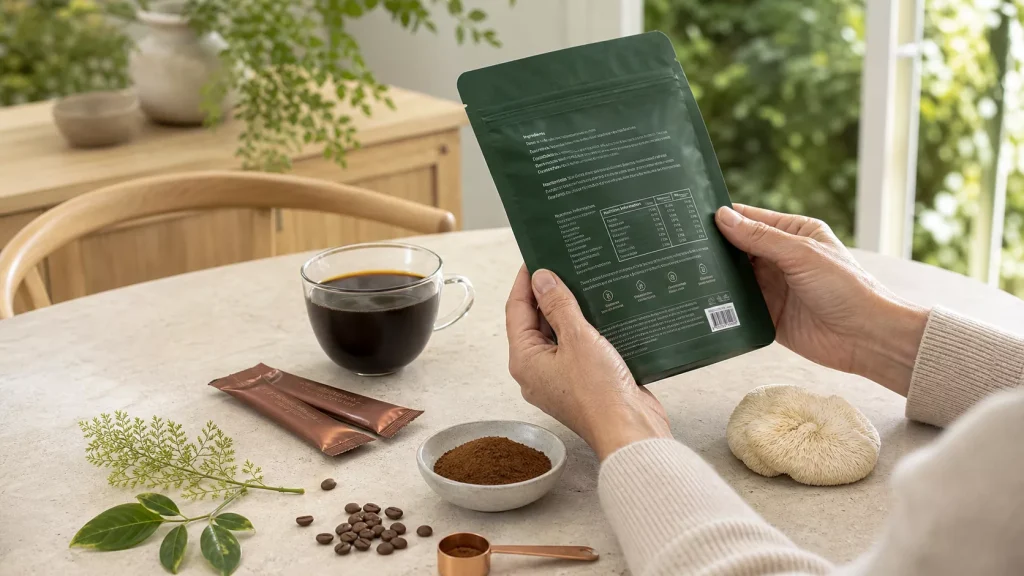

Functional Coffee Explained
Functional coffee is a broad term used for coffee products containing additional ingredients beyond conventional roasted coffee.
Depending on the formula, these products may include botanical extracts, mushroom-derived ingredients, vitamins, minerals, protein, fiber, or other nutritional components. They are commonly sold as instant coffee sachets, powdered drink mixes, capsules, or ready-to-brew blends.
The word “functional” does not refer to one standardized formula. Each product can have a very different ingredient list, caffeine level, preparation method, and intended use.
Common Product Formats
Functional coffee is available in several convenient formats.
Individual Sachets
Single-serving sachets contain a pre-measured amount of powder. They are convenient for travel, offices, and quick morning preparation.
Resealable Pouches
Larger pouches allow customers to measure each serving themselves. They may offer more flexibility but require careful attention to the recommended serving size.
Coffee Capsules
Some functional formulas are supplied in capsules designed for compatible coffee machines. Customers should confirm machine compatibility before ordering.
Ground Coffee Blends
Additional ingredients may also be combined with traditional ground coffee intended for a brewer, filter, or French press.
Ingredients You May Encounter
Functional coffee formulas vary widely, but several ingredient categories appear frequently.
Coffee and Caffeine
The base may be instant coffee, ground coffee, coffee extract, or a combination. Some products contain a similar amount of caffeine to regular coffee, while others use a reduced-caffeine formula.
People who are sensitive to caffeine should check the amount per serving rather than estimating it from the package size.
Botanical Ingredients
Some formulas include botanical extracts. The amount and concentration can differ substantially between products, so the full ingredient list and serving directions should be reviewed carefully.
Mushroom-Derived Ingredients
Functional coffee may contain ingredients derived from mushrooms such as lion’s mane, reishi, chaga, or cordyceps. These can be supplied as powders or concentrated extracts.
Their presence does not guarantee a particular health outcome. Customers should avoid relying on broad marketing language and instead examine the actual ingredient quantity and product labeling.
Protein, Fiber and Nutrients
Certain coffee blends contain added protein, collagen, fiber, vitamins, or minerals. These ingredients can change the texture, flavor, nutritional content, and preparation requirements of the drink.
Sweeteners and Creamers
Some products are unsweetened, while others include sugar, plant-based creamers, milk ingredients, or alternative sweeteners. Customers with allergies or dietary preferences should review these details before use.
How to Read the Label
Before choosing a functional coffee, check the following information:
- Complete ingredient list
- Caffeine amount per serving
- Recommended serving size
- Allergen information
- Added sugar or sweeteners
- Preparation instructions
- Storage requirements
- Country of manufacture
- Expiry or best-before information
A short product name or front-label claim cannot replace the full ingredient panel.
Preparing Functional Coffee
Preparation depends on the product format. Instant sachets generally require hot water, while ground blends require appropriate brewing equipment.
Following the manufacturer’s instructions is important because using more powder does not necessarily improve the product. It can instead increase caffeine and other ingredient intake.
Consumers should also consider other caffeinated drinks consumed during the day, including tea, energy drinks, soft drinks, and conventional coffee.
Who Should Be Careful?
Caffeine and additional functional ingredients may not be suitable for everyone.
People who are pregnant or breastfeeding, sensitive to caffeine, taking medication, managing a medical condition, or considering a product for regular use should seek advice from a qualified healthcare professional.
Functional coffee should not be used as a substitute for medical treatment, a balanced diet, adequate sleep, or professional health advice.
Choosing a Product for Your Routine
The best starting point is the intended format and daily routine.
Customers seeking convenience may prefer individual sachets. Those who already use brewing equipment may prefer ground blends or capsules. Flavor, caffeine level, ingredients, dietary requirements, and preparation time should all be considered.
PIRAVA presents available product details to help customers compare functional coffee options more clearly.
Final Thoughts
Functional coffee can be a convenient way to combine a familiar coffee routine with additional ingredients. However, formulas vary considerably, and not every product is suitable for every person.
Reading the ingredient list, checking caffeine content, following the recommended serving size, and avoiding unsupported health assumptions are the most important steps when choosing a product.
Important Notice: This article is provided for general informational purposes and is not medical or nutritional advice. Individual responses to caffeine and other ingredients may vary.